LS Swap Electric Fans: How the PCM Controls Them and How to Keep Your Swap Cool
Your LS swap runs great on the highway, but sit in traffic for five minutes and the temp gauge starts climbing. Or the fans run all the time, even on a cold start. Either way, the problem is usually how the fans are wired or how they’re set up in the tune.
Here’s how electric fans work in an LS swap and how to get them working right.
Why Most LS Swaps Use Electric Fans
Many LS engines came with a belt-driven mechanical fan, especially in trucks. In a swap, that fan often doesn’t fit, doesn’t line up with the radiator, or takes up room you need. Electric fans solve that. They fit tight spaces, only run when needed, and can be controlled by the PCM.
How the PCM Controls Your Fans
The PCM doesn’t power the fans directly. It switches relays, and the relays send power to the fans. The tune tells the PCM:
- What coolant temperature turns each fan on
- What temperature turns each fan back off
- Whether the fans come on when the A/C is running
- How a second fan or high-speed fan works, for two-fan or two-speed setups
That means your fan wiring and your tune have to match. If the tune doesn’t know you’re running electric fans, they may never turn on, even though the wiring is fine.
Wiring Your Fans the Right Way
- Always use relays. Electric fans draw a lot of current, far more than the PCM can handle directly. Use relays rated above your fans’ amp draw.
- Fuse every fan. Use the fuse rating your fan or relay kit calls for.
- Use heavy enough wire. Undersized wire gets hot and drops voltage, and that makes fans spin slower.
- Use a solid ground. A bad ground is one of the most common reasons fans run weak or not at all.
- Run the fan relay trigger wires to the PCM’s fan outputs if you want the PCM to control them. If you’re using a separate thermostat switch instead, tell us when you order so the tune is set up to match.
Choosing Fan Temperatures
Your fans should turn on a little above your thermostat’s opening temperature, so the thermostat does its job first and the fans back it up.
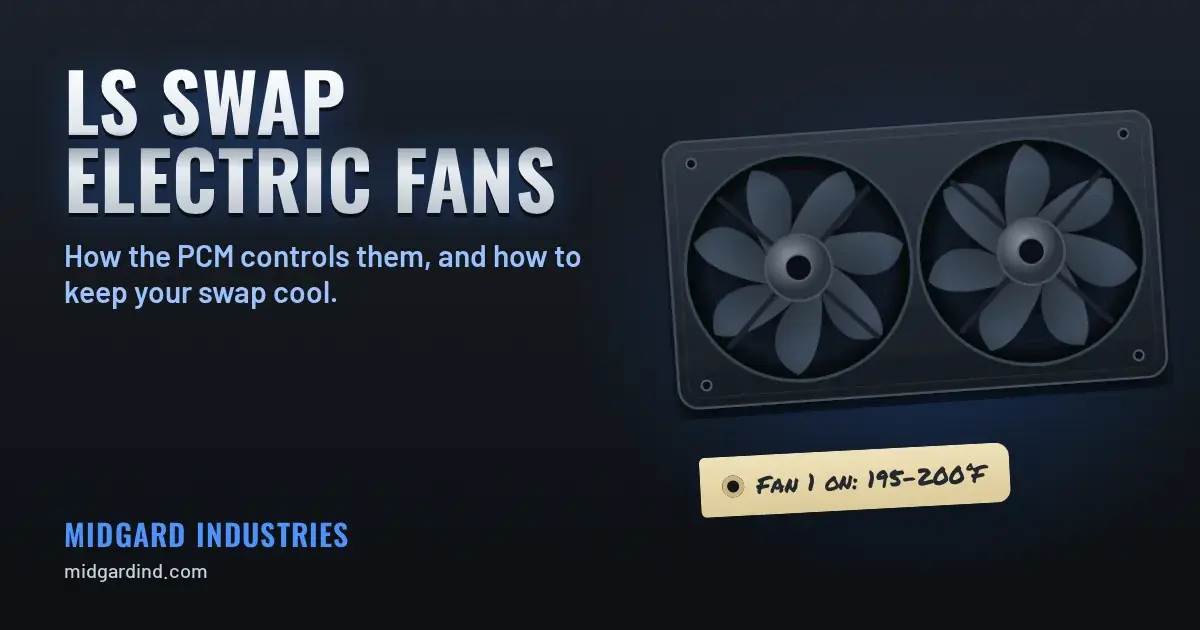
For example, with a common 180°F thermostat, many swaps set the first fan to come on somewhere around 195–200°F and turn off a few degrees lower. A second fan or high speed comes on higher. The exact numbers depend on your radiator, fans, and how you drive.
If you have a specific thermostat or want different temps, let us know when you order.
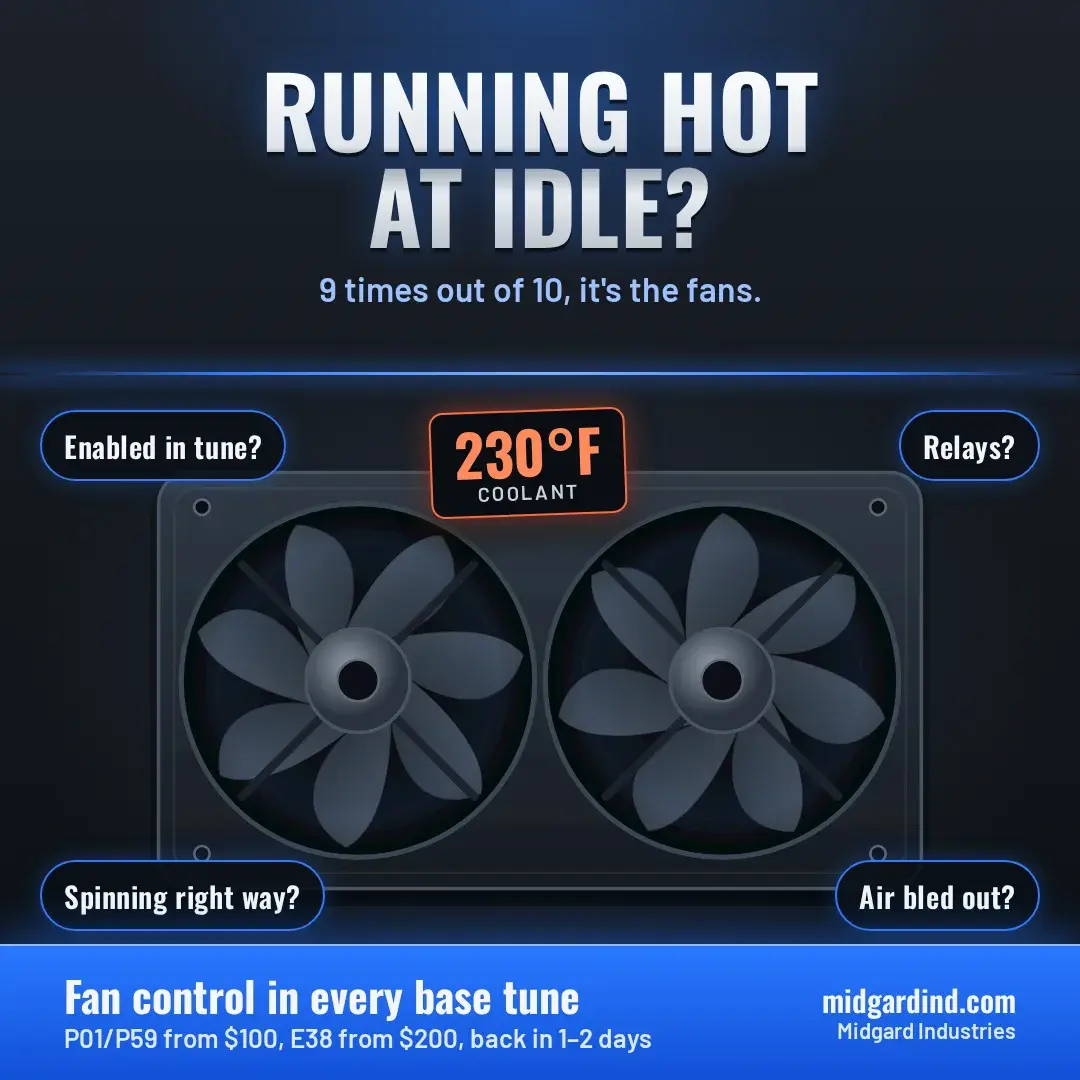
“My LS Swap Runs Hot at Idle”
If the engine stays cool at highway speeds but heats up in traffic, the fans and airflow are the first place to look:
- The fans aren’t turning on. Check that the fans are enabled in the tune, the relays click, and the fuses are good.
- The fans are spinning the wrong way. Many fans can push or pull depending on wiring. Make sure air is moving the right direction through the radiator.
- There’s no shroud. Without a shroud, fans only pull air through the part of the radiator right behind them.
- The fans are too small for the radiator or engine.
- There’s air in the cooling system. LS engines are known for trapping air, especially when the engine sits lower than the radiator. Bleed the system completely, including the steam vent lines if your engine has them.
If it runs hot at highway speed too, the problem is more likely the radiator, water pump, thermostat, or a blockage than the fans.
Fans Are Part of Every Base Tune
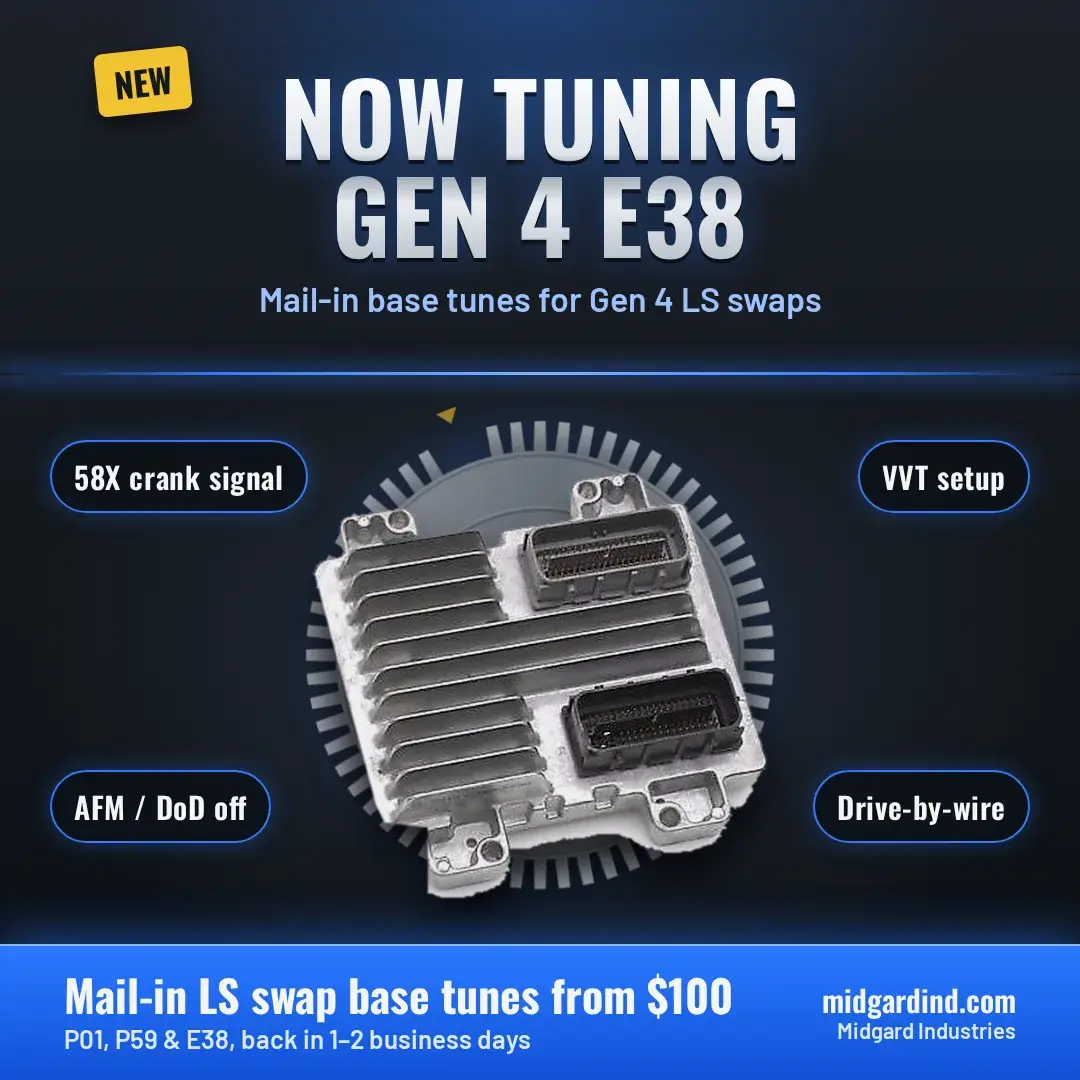
Electric fan control is included in every Midgard base tune, for Gen 3 P01 and P59 PCMs and Gen 4 E38 ECUs. When you order, tell us:
- How many fans you’re running
- Whether they’re single-speed or two-speed
- Your thermostat temperature
- Whether you’re running A/C
- Whether the PCM or a separate switch is controlling the fans
Running a mechanical fan instead? Just say so and we’ll set up the tune for that.
Order Your Base Tune

E38 tunes include TCM programming for 4L60E/4L80E swaps. Plus $10 return shipping. Typical turnaround is 1–2 business days after we receive your ECU.
Order your mail-in LS swap base tune here →
Still dialing in your swap? See our LS Swap Startup Checklist, or contact us or call (430) 215-4536.
Follow Midgard Industries
Don't want to tune it yourself?
Mail in your P01/P59 and get a VATS-deleted, swap-ready base tune for $100. Typical turnaround is 1-2 business days after the ECU is received.