What VATS Removal Actually Does
What VATS Removal Actually Does
When an LS engine is installed into a different vehicle, one of the first tuning changes people ask about is a VATS delete. It is often described as something that “makes the engine run,” but that description leaves out an important detail:
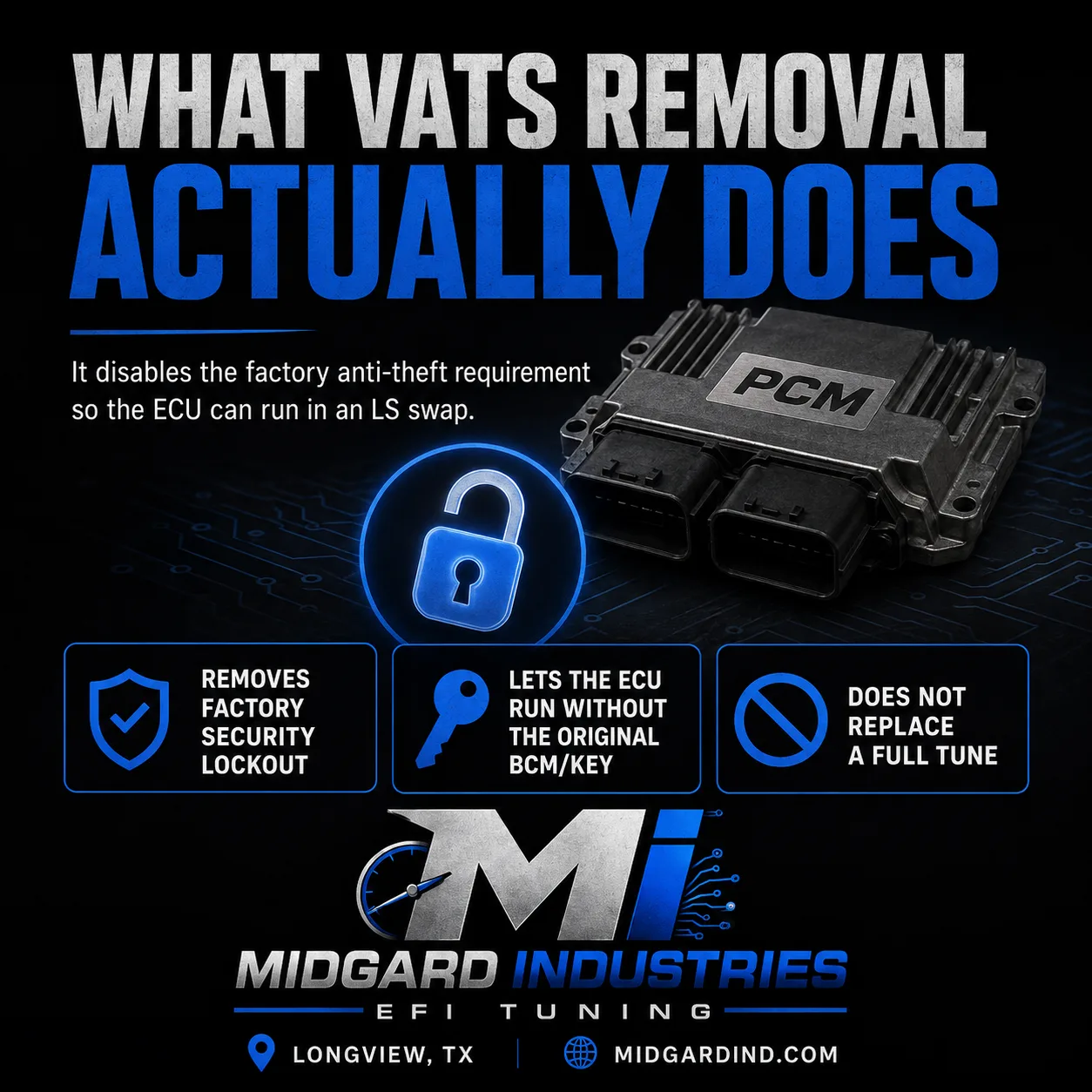
VATS removal only disables the factory anti-theft authorization requirement inside the ECU calibration.
It does not tune the engine for a camshaft, change injector data, correct the transmission setup, or fix wiring and mechanical problems.
Understanding what VATS removal actually does can help you avoid expecting it to solve problems that require additional calibration or diagnosis.
What Is VATS?
VATS stands for Vehicle Anti-Theft System. Depending on the GM platform and model year, you may also see related security systems referred to as Passkey or Passlock.
In the original vehicle, several modules work together before the engine is allowed to continue running. The exact process varies by application, but it generally involves:
- The ignition key or security sensor
- The body control module
- The engine control module
- A valid security password or fuel-enable message
When the correct security information is received, the ECU allows normal engine operation.
If the expected authorization is missing or incorrect, the ECU may prevent the engine from continuing to run.
Why VATS Becomes a Problem During an LS Swap
During an LS swap, the engine and ECU are usually removed from the original donor vehicle. The original ignition switch, body control module, instrument cluster, and security wiring may not be transferred.
That means the ECU may still be waiting for a security message from components that are no longer installed.
The engine may have:
- Correct fuel pressure
- Proper ignition power
- Good crank and cam signals
- Working coils
- A functional ECU
- Correct mechanical timing
But if VATS is still active, the ECU may not authorize normal fuel operation.
This is why an LS swap can crank normally but still refuse to stay running.
What VATS Removal Changes
VATS removal changes the ECU calibration so the computer no longer requires the original factory anti-theft authorization before allowing the engine to operate.
In practical terms, it tells the ECU:
Do not wait for the original security system before enabling normal engine operation.
This allows the ECU to function in a swap without the matching donor-vehicle key, body control module, and factory security network.
Depending on the ECU, operating system, and application, the calibration may contain more than one VATS-related setting. A proper setup should address the relevant security parameters for that specific file rather than assuming every GM calibration works exactly the same way.
Common Symptoms of Active VATS
A vehicle with VATS still active may show symptoms such as:
- Cranks but will not start
- Starts and immediately stalls
- Injector operation is disabled
- Security-related diagnostic trouble codes
- Fuel-enable status remains inactive
- No obvious mechanical reason for the no-start condition
The exact symptom can vary. Some engines may briefly fire before shutting off, while others may only crank.
VATS is not the only cause of these problems, so the diagnosis should still include power, grounds, crank signal, fuel pressure, injector operation, and wiring.
What VATS Removal Does Not Do
A VATS delete is not the same as a complete LS swap tune.
It does not automatically correct:
- Engine displacement
- Injector flow data
- MAF calibration
- MAP sensor scaling
- Camshaft idle airflow
- Startup fueling
- Idle speed
- Spark timing
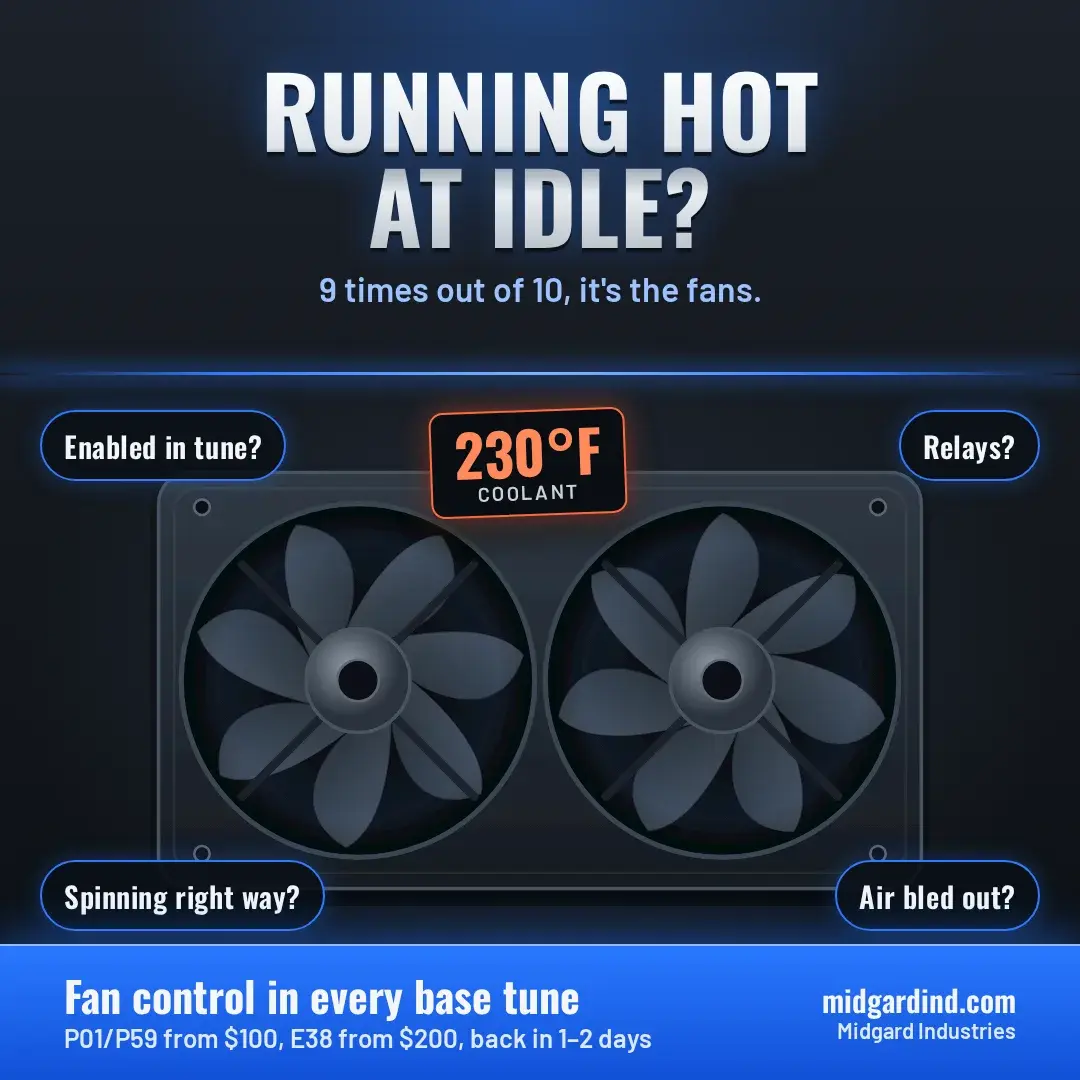
- Electric fan controls
- Tire size
- Gear ratio
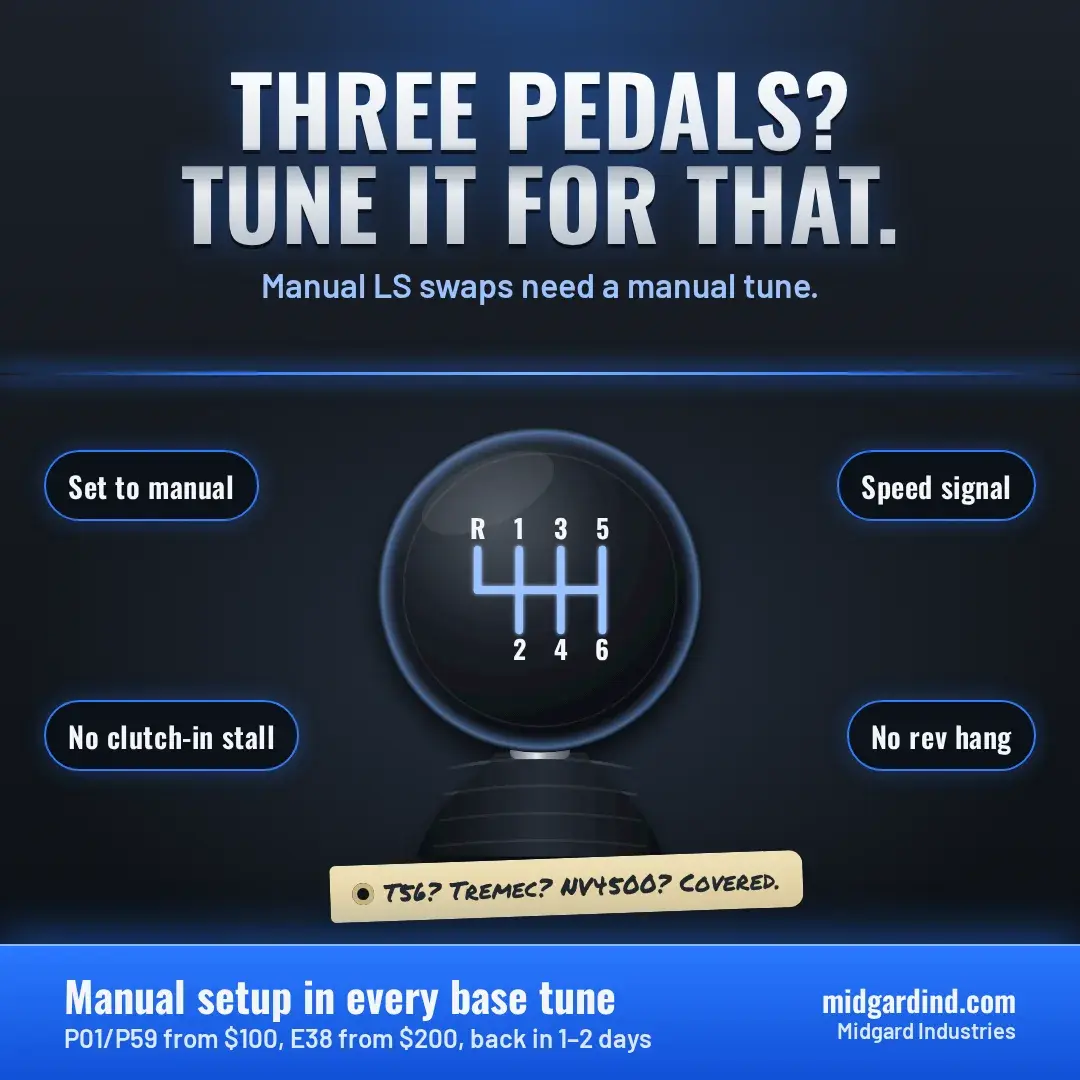
- Transmission type
- 4L60E or 4L80E configuration
- Manual transmission conversion
- Throttle type
- Diagnostic settings for unused swap components
If the engine is stock and the rest of the combination closely matches the donor calibration, disabling VATS may be enough to make it start.
That does not mean the calibration is properly matched to the swap.
Why a Cammed LS Needs More Than VATS Removal
A larger camshaft changes engine airflow and vacuum, especially during startup, idle, low-speed operation, and deceleration.
A cammed LS may need adjustments to:
- Cranking and startup airflow
- Base running airflow
- Desired idle speed
- Idle spark control
- VE calibration
- MAF calibration
- Startup fueling
- Throttle follower and cracker settings
- In-gear idle behavior
- Power enrichment
Removing VATS can allow the engine to run, but it cannot compensate for the airflow changes created by the camshaft.
That is why a cammed engine may start after VATS removal but still:
- Need throttle to stay running
- Surge at idle
- Stall when shifted into gear
- Hang RPM on deceleration
- Run rich or lean
- Have poor low-speed drivability
Those problems require a calibration matched to the actual engine combination.
VATS Removal Versus a Base Startup Tune
A VATS removal service changes only the security-related portion of the calibration.
A base startup tune goes further by setting up the ECU around the supplied engine and vehicle information.
A typical LS swap base tune may include:
- VATS removal
- Engine displacement
- Transmission configuration
- Injector setup
- MAP and MAF configuration
- Electric fan settings
- Startup airflow
- Idle airflow
- Basic fueling adjustments
- Camshaft-related starting changes
- Tire-size and gear-ratio correction
- Applicable swap-related diagnostic settings
The goal of a base tune is to provide a reasonable starting calibration so the engine can start, idle, and operate well enough for inspection and data logging.
A base tune is still not the same as a completed street or dyno tune.
VATS Removal Cannot Fix Wiring Problems
One of the most common mistakes during an LS swap is assuming every no-start problem is caused by VATS.
VATS removal cannot correct:
- Missing ignition power
- Incorrect ECU power feeds
- Poor engine or chassis grounds
- Reversed connectors
- Damaged wiring
- No crankshaft position signal
- No camshaft position signal
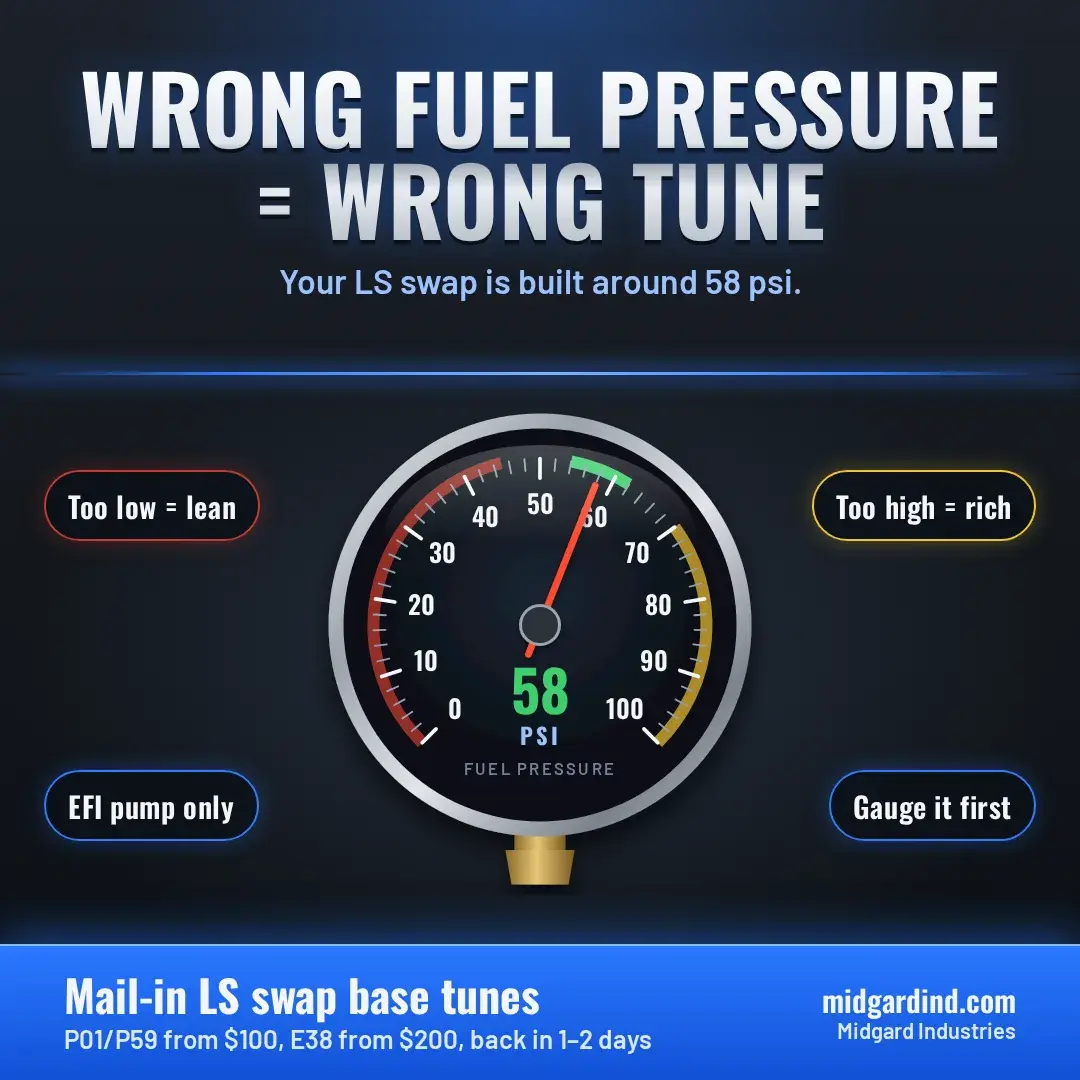
- Low fuel pressure
- Incorrect injector wiring
- Failed coils
- Faulty sensors
- Incorrect mechanical timing
- A damaged ECU
If the ECU does not power up, does not communicate, or does not receive a valid crank signal, disabling VATS will not make the engine start.
A no-start should be diagnosed rather than treated as a calibration problem automatically.
Can VATS Be Disabled Without the Original Vehicle?
In many Gen 3 LS applications, VATS can be disabled directly in the ECU calibration without having the original donor vehicle present.
The tuner normally needs:
- A compatible ECU
- A readable calibration
- ECU identification information
- Engine and transmission details
- The correct programming equipment
For mail-in ECU programming, the customer should provide the ECU service number and complete build information so the tuner can verify compatibility before writing the file.
Does VATS Removal Affect the Vehicle’s Physical Security?
VATS removal disables the ECU’s reliance on the original GM anti-theft authorization system.
It does not remove:
- An aftermarket alarm
- A hidden kill switch
- A starter interrupt
- A battery disconnect
- A fuel-pump cutoff
- Other physical theft-deterrent systems
Because the factory ECU security requirement is being disabled, builders should consider using another form of theft protection in the completed swap.
Is VATS Removal the Same as Removing the Check-Engine Light?
No.
VATS removal addresses the security authorization function. It does not automatically disable unrelated diagnostic trouble codes or turn off the check-engine light.
If the swap does not use certain donor-vehicle systems, applicable diagnostics may need to be reviewed separately.
Every diagnostic should not simply be disabled. Codes that protect the engine or identify real sensor and circuit problems should normally remain active.
The Bottom Line
VATS removal allows an LS ECU to operate without the original factory security system.
It can solve a security-related crank-no-start or start-and-stall condition, but it is only one part of properly preparing an ECU for an LS swap.
A complete startup calibration may also need to account for:
- Engine size
- Camshaft
- Injectors
- Fuel pressure
- MAF and MAP sensors
- Transmission
- Converter
- Tire size
- Gear ratio
- Electric fans
- Intended use
The simplest way to explain it is:
VATS removal gives the ECU permission to run the engine.
A proper tune tells the ECU how to run that engine correctly.
Need help setting up a P01 or P59 ECU for an LS swap? Send the ECU service number, connector colors, engine size, transmission, camshaft, injector information, sensors, fuel pressure, tire size, gear ratio, and complete modification list.
Midgard Industries EFI Tuning
Longview, Texas
https://midgardind.com
Follow Midgard Industries
Don't want to tune it yourself?
Mail in your P01/P59 and get a VATS-deleted, swap-ready base tune for $100. Typical turnaround is 1-2 business days after the ECU is received.